The number is less dramatic than the internet makes it sound.
If you are 45, 50 or 60, you do not suddenly need a special amount of protein because you entered menopause. The official reference values do not create a separate protein target for menopause itself.1
That matters because “more protein” is often presented as a universal solution for weight loss, hormones, energy and muscle. Protein is important — particularly for maintaining and rebuilding muscle — but more is not automatically better, and the right amount depends on the person.
What does 0.8 g/kg actually look like?
The calculation is straightforward: body weight in kilograms × 0.8. For the DGE reference values, the calculation is intended for normal-weight adults; for people with overweight, the DGE notes that reference weight rather than current weight should be used.1
Approximate daily reference amount at 0.8 g/kg.
Approximate daily reference amount at 0.8 g/kg.
Approximate daily reference amount at 0.8 g/kg.
These are examples, not personalised prescriptions. If you have kidney disease, significant illness, are underweight, or have been told to follow a medically specific diet, your protein target should be discussed with a qualified professional.
So why does everyone talk about eating more after 45?
Because maintaining muscle becomes increasingly important as we age. Expert groups such as ESPEN have suggested higher protein intakes — around 1.0–1.2 g/kg/day — for healthy older adults, particularly as people move into older age.2 The DGE takes a more conservative position for healthy adults under 65 and currently keeps its reference value at 0.8 g/kg/day.1
Those recommendations are not actually contradictory once you understand what they are trying to answer. A reference value is about covering nutritional needs; an expert target may be aimed at supporting muscle preservation in older adults. For women in their 40s and 50s, the practical question is usually not “How can I eat as much protein as possible?” but “Am I getting a meaningful protein source regularly?”
What if you exercise?
Activity changes the conversation. The DGE states that healthy adults aged 19–64 who exercise for no more than five hours per week do not have an increased protein requirement solely because of that activity. For people training more than five hours per week, the DGE sports position recommends roughly 1.2–2.0 g/kg/day depending on training status and goals.3
You do not need to jump to the top of that range just because you walk, do Pilates or occasionally lift weights. Training volume, intensity, goals and the rest of your diet matter.
A better way to build your meals
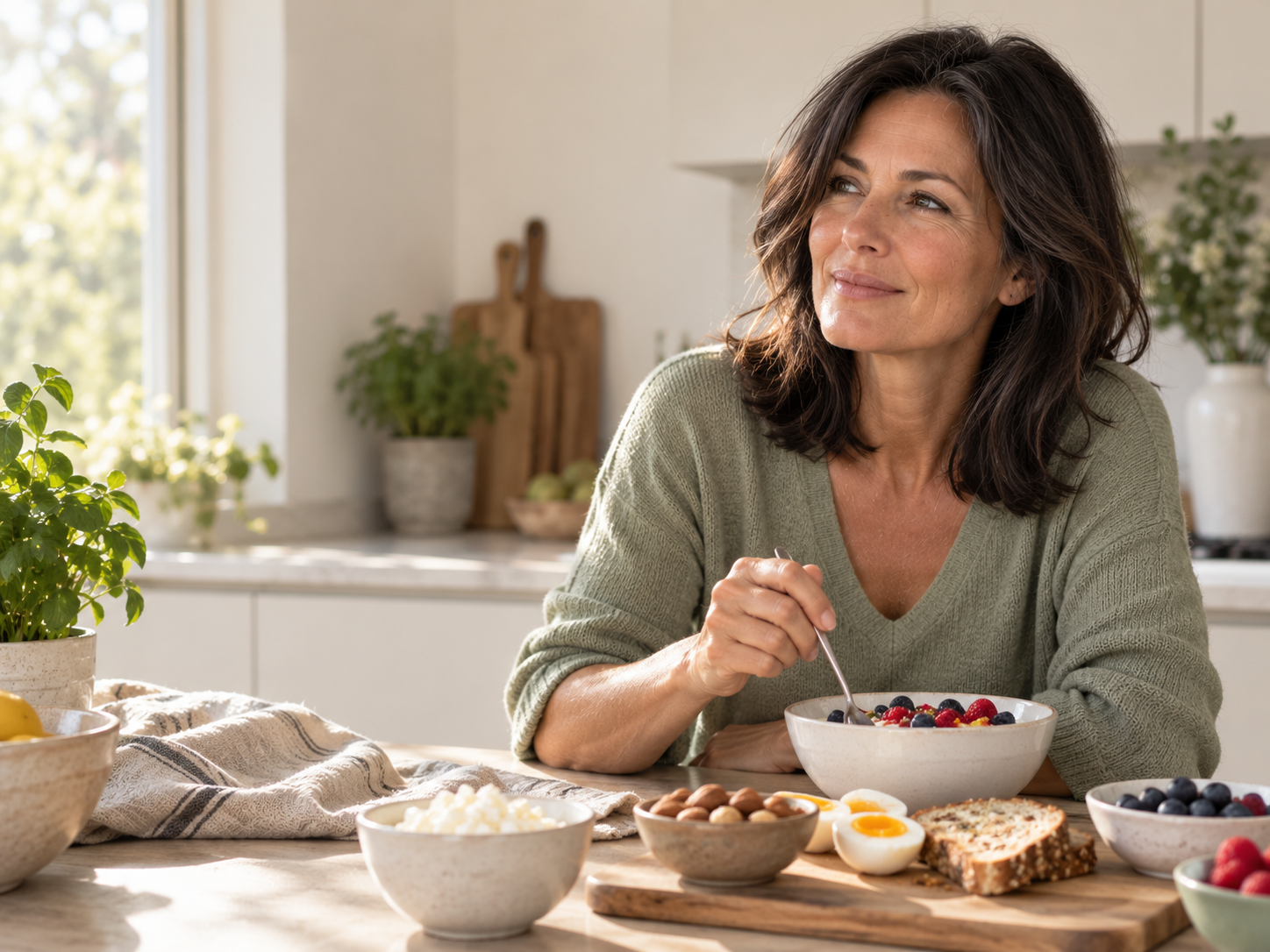
Instead of turning every meal into a protein calculation, make protein one of the visible parts of the plate. This is easier to maintain and makes it less likely that you end up trying to “catch up” at dinner.
Do you need protein powder?
Not automatically. The DGE recommends meeting protein needs primarily through a balanced diet. Protein powders can be convenient, but they are a tool rather than a requirement. If normal meals already cover your needs, adding a shake simply because it is marketed for women over 40 is not necessary.
Convenience becomes more relevant when appetite is low, meals are difficult to prepare, or a higher intake has been recommended for a specific reason. In those cases, the right product and amount are individual decisions.
A simple protein check for your next week
You do not need to track every gram forever. Try this for seven days:
Can I name the main protein source before I eat?
Is there a substantial protein food here, not just a garnish?
Am I relying on dinner to provide most of the day's protein?
If the answer is consistently “no” at one meal, you have found the easiest place to improve. You may not need a complicated diet plan at all.
1. Deutsche Gesellschaft für Ernährung (DGE), Protein reference values and Protein FAQ.
2. ESPEN Expert Group, Protein intake and exercise for optimal muscle function with aging.
3. DGE, Protein intake in sport.
More from Better After 45
High-Protein Meals for Women 45+
If you are looking for practical next steps, explore the related guide and the carefully selected products already featured there.
Explore practical high-protein meal ideas →