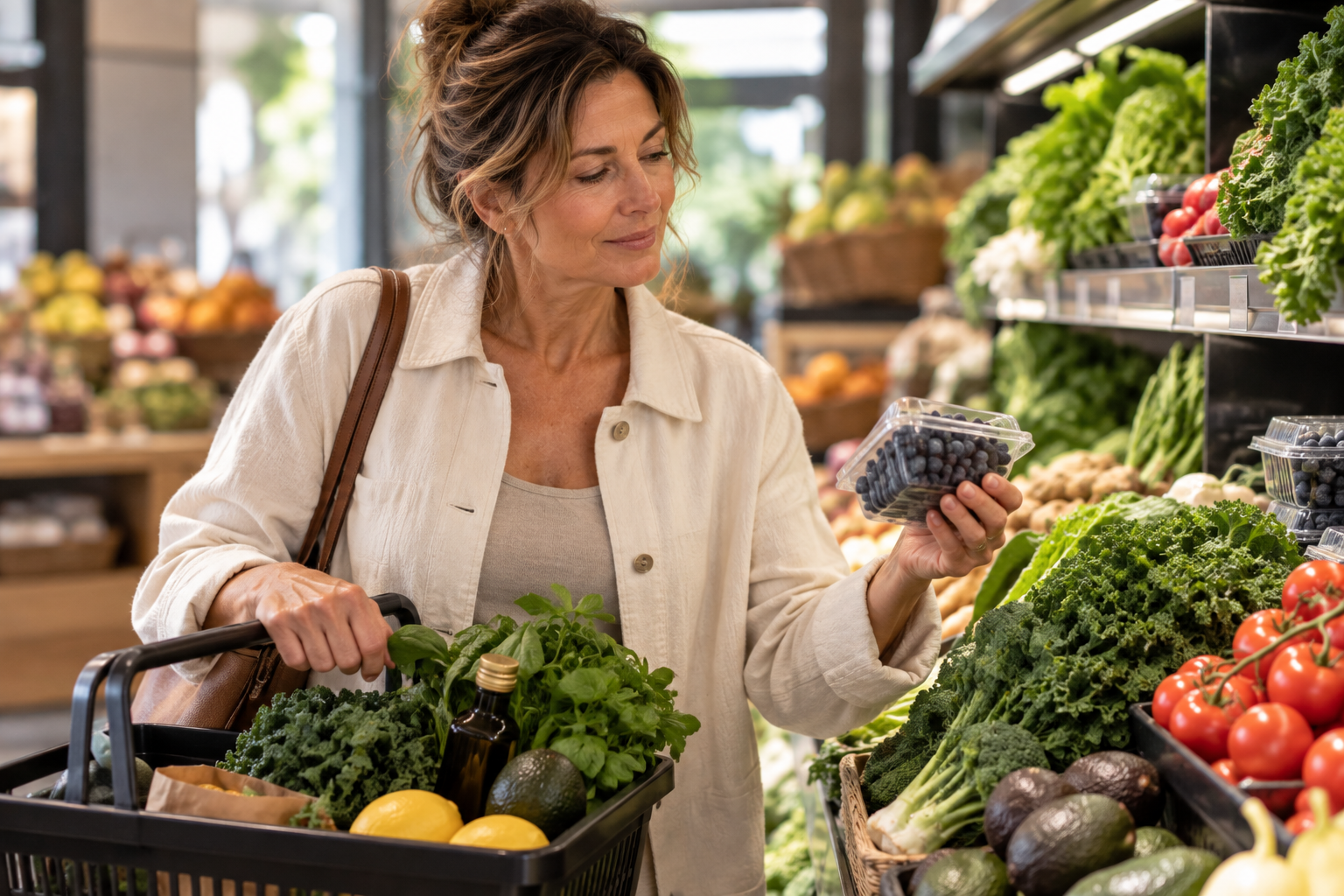
What an anti-inflammatory grocery trip should actually look like
You do not need a special aisle or an expensive supplement shelf. A useful shopping basket looks surprisingly ordinary. The goal is to make the foods that commonly appear in Mediterranean-style eating easy to find, easy to store and easy to turn into meals.
Research on anti-inflammatory eating is focused more on overall dietary patterns than on individual “superfoods.” Commonly emphasized foods include vegetables and fruit, high-fiber whole grains, legumes, unsaturated fats, oily fish, herbs and spices.
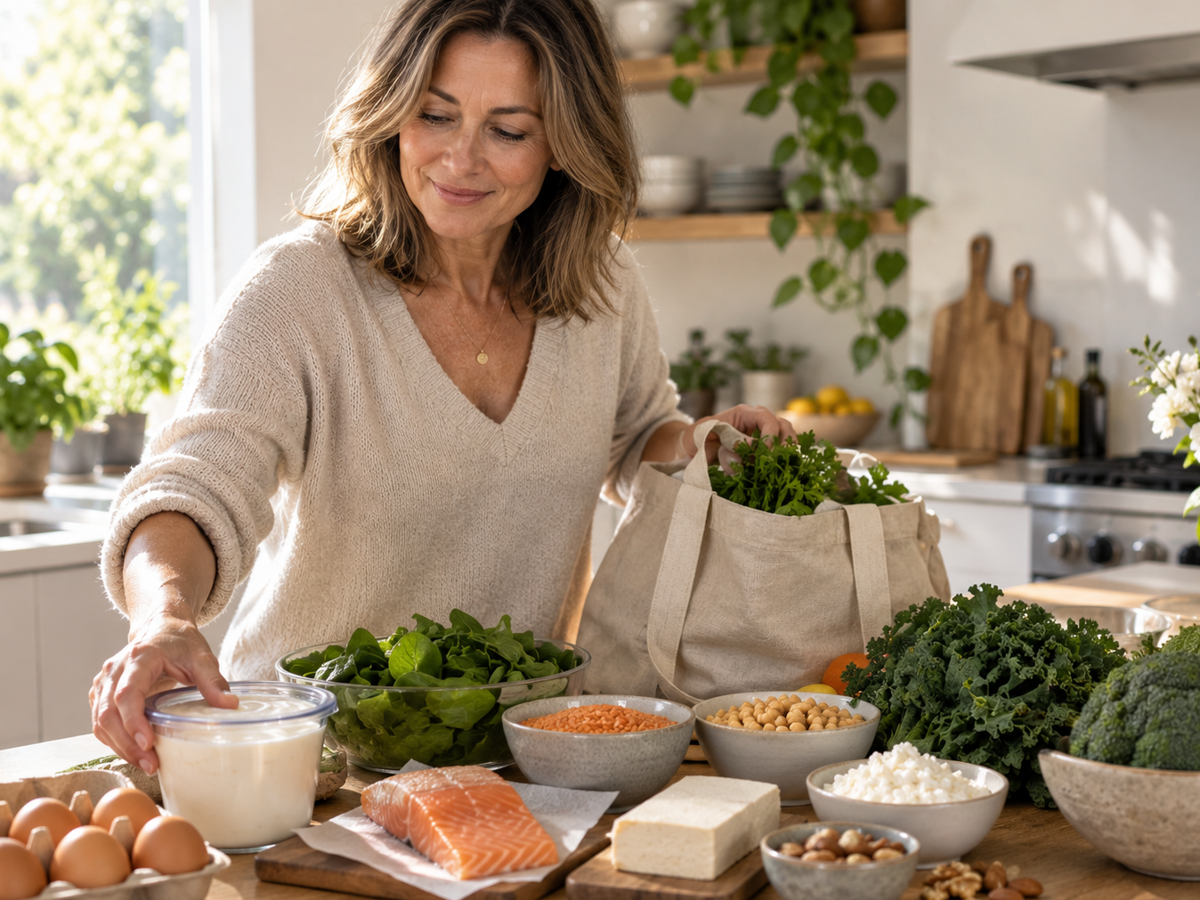
The weekly grocery list: 15 anti-inflammatory staples
These 15 foods are versatile, easy to find and useful across several simple meals.
Fresh, frozen or canned? Choose convenience when it helps
Fresh
Great when you know you will use it soon. Buy only what your week can realistically handle.
Frozen
Frozen berries and vegetables are useful backups when fresh produce is running low.
Canned
Beans, lentils, salmon and sardines can remove a major barrier to cooking on busy days.
Check the label
For canned foods, compare sodium or added sugar when relevant and rinse beans if that suits the meal.
What to buy less often
Sweetened drinks
Make water, unsweetened tea and coffee the everyday defaults more often.
Highly processed snacks
Keep them occasional rather than letting them displace more filling foods.
Processed meats
Bacon, sausages and hot dogs do not need to be the everyday protein choice.
Build three meals from one shopping trip
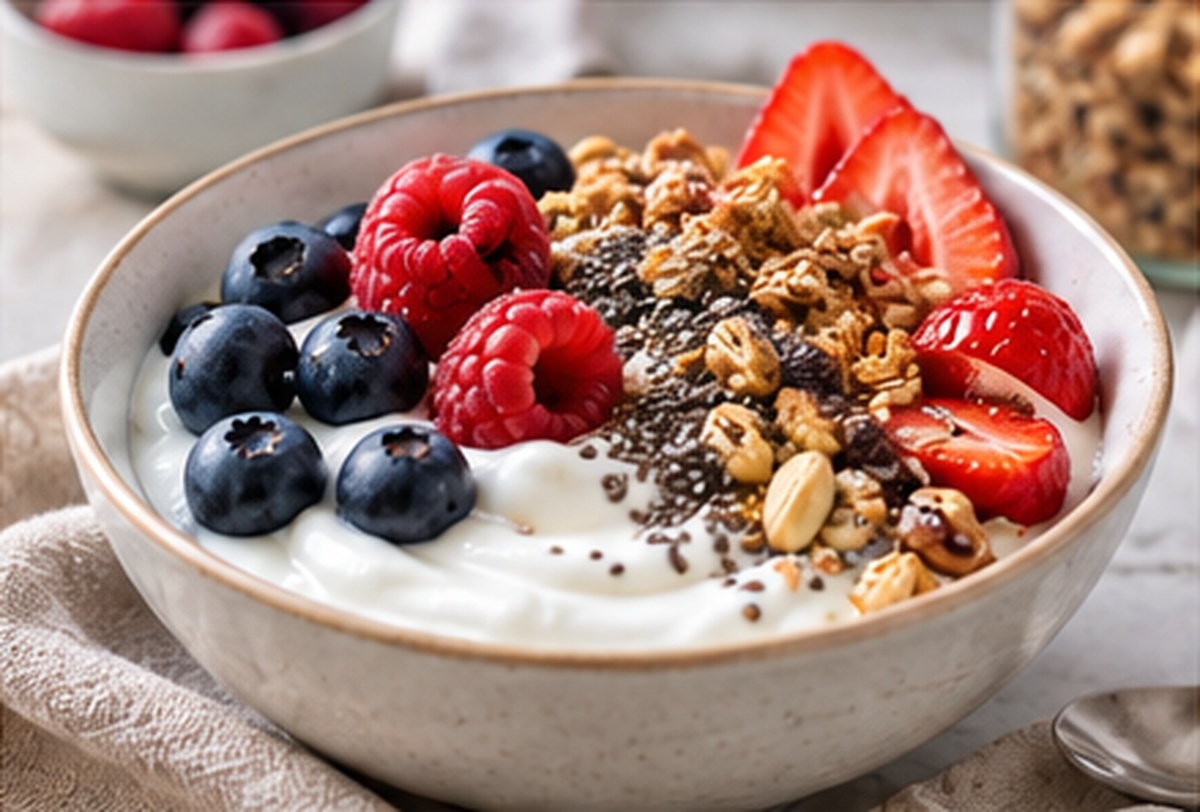
Greek yogurt + berries + oats + chia seeds or walnuts.
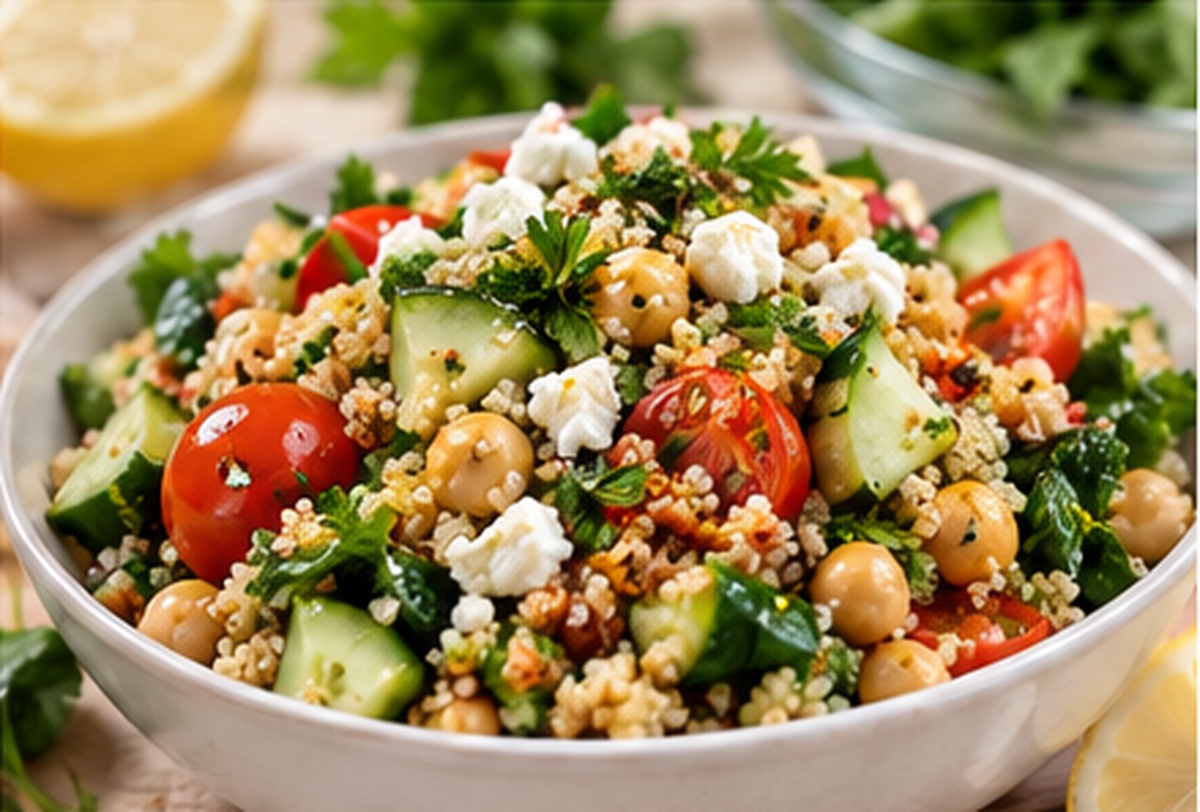
Quinoa + chickpeas + cucumber + tomatoes + feta + herbs.
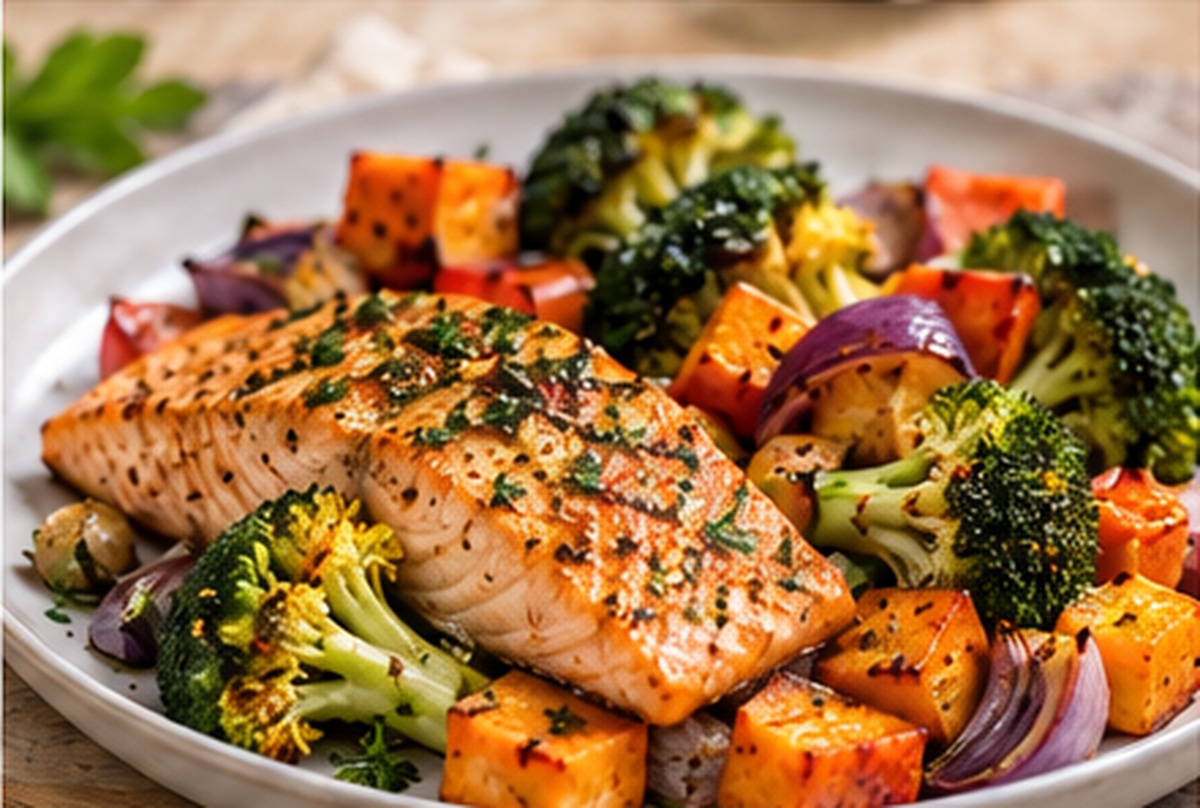
Salmon + broccoli + sweet potatoes + olive oil.
Use the same grocery staples in different combinations so one shopping trip can cover several meals.
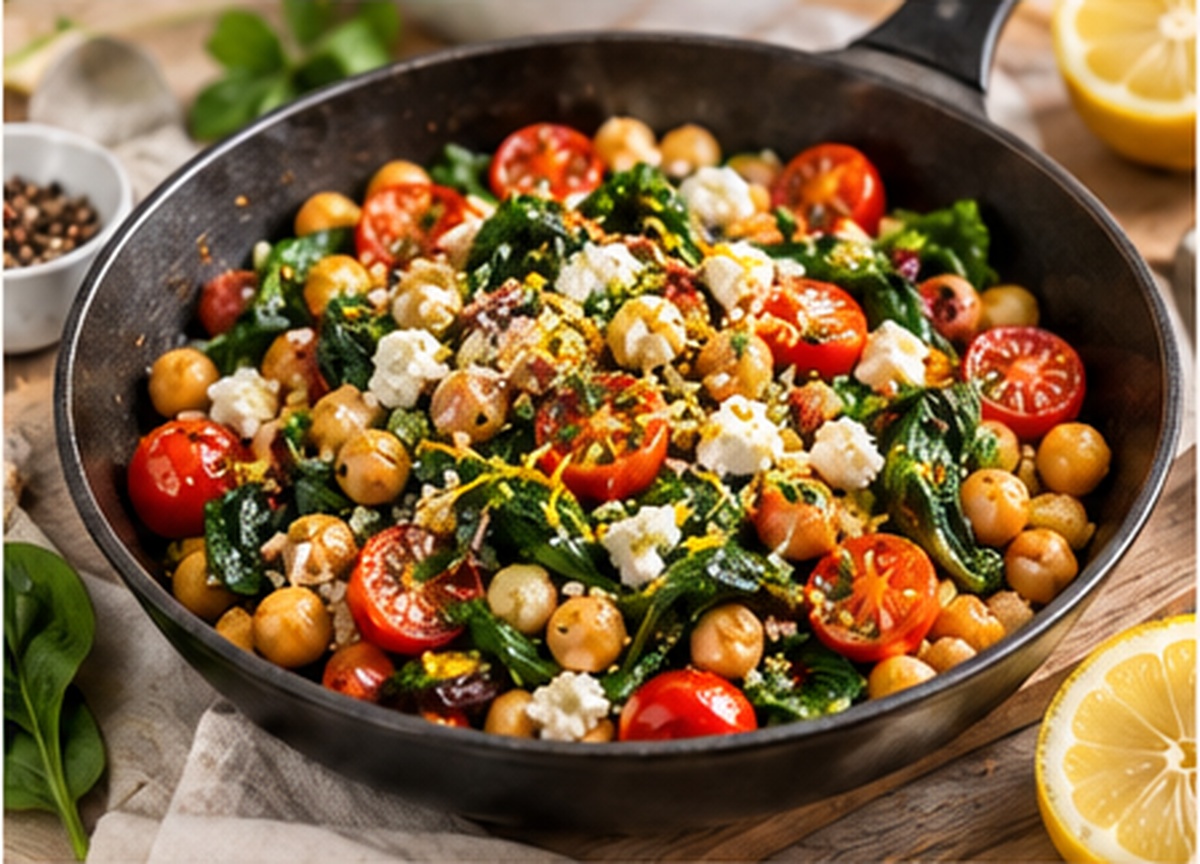
A simple 20-minute dinner from the list
You need
- 1 can chickpeas, drained
- 250 g cherry tomatoes
- 150 g baby spinach
- 1 small onion, sliced
- 1 garlic clove, minced
- 1 tbsp extra-virgin olive oil
- ½ lemon, juice + zest
- 1 tsp dried herbs, salt & pepper
How to make it
- Heat olive oil in a wide pan and cook the onion for 3 minutes.
- Add tomatoes and garlic. Cook for 4 minutes until the tomatoes soften.
- Stir in chickpeas, herbs and 60 ml water. Simmer for 5 minutes.
- Fold in spinach. Finish with lemon juice, zest and black pepper. Serve with whole-grain bread or quinoa.
The useful rule for shopping after 45
Do not ask, “Which food fights inflammation best?” Ask, “Which foods can I keep buying, preparing and eating regularly?” That question produces a much more sustainable kitchen.
Harvard T.H. Chan School of Public Health — Diet Review: Anti-Inflammatory Diet.
Arthritis Foundation — Anti-Inflammatory Diet guidance.
General information only; this article is not a diagnosis or medical treatment.
 Anti-Inflammatory Recipes & Kitchen Essentials →
 Easy High-Protein Lunches →