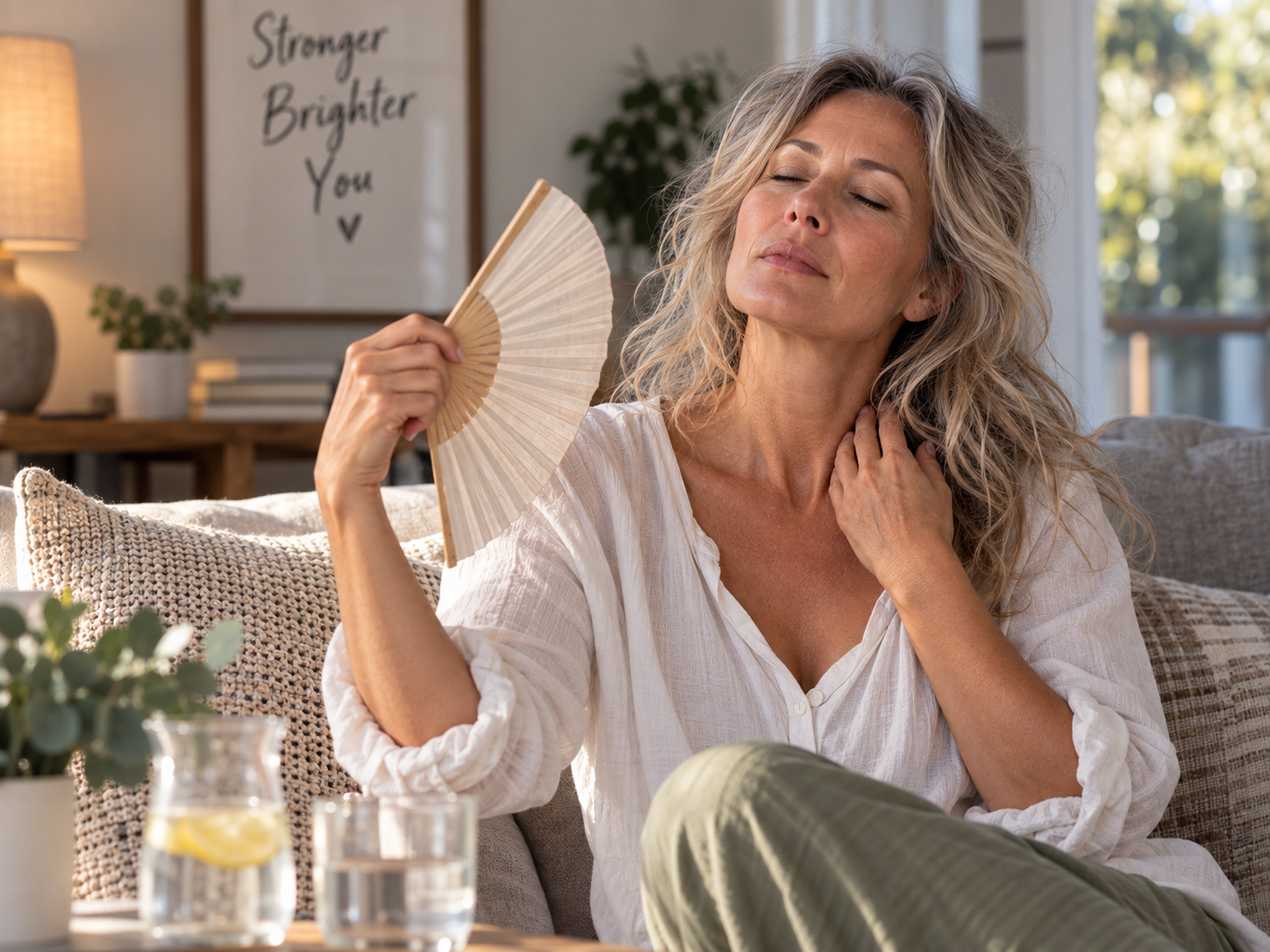
Hot flashes are common — but that does not mean you have to simply put up with them.
Hot flashes and night sweats are among the most commonly reported symptoms of the menopause transition. A hot flash is a sudden feeling of heat, often in the upper body, sometimes followed by sweating, chills or a faster heartbeat. Episodes vary widely: some are barely noticeable, while others interrupt work, exercise, sleep or everyday plans. 1
There is no single trick that works for every woman. The most useful approach is usually a combination of making the environment easier to cool, reducing personal discomfort and paying attention to patterns. And if symptoms are genuinely disruptive, there are medical treatment options worth discussing rather than assuming you simply have to endure them. 1,2
5 practical ways to make hot flashes easier
1. Make cooling easier before you need it
The best time to think about cooling is before a hot flash starts. Keep the room comfortable, choose breathable layers and make sure you can remove a layer quickly without turning the moment into a whole production.
At home, that can mean a fan within easy reach, lighter sleepwear or bedding, and a cold drink nearby. At work or while travelling, it can mean dressing in layers and choosing fabrics that do not trap as much heat.
2. Dress for adjustability, not just the weather
Hot flashes are unpredictable. A beautiful outfit that leaves you with no way to adjust your temperature can become surprisingly uncomfortable.
Try building outfits around pieces you can remove quickly: an open shirt over a simple top, a lightweight jacket rather than a thick sweater, or breathable sleepwear that does not cling. This is less about buying special “menopause clothing” and more about giving yourself options.
3. Build a cooler bedroom
Night sweats can be particularly frustrating because they turn a brief temperature change into a disrupted night. A cooler, well-ventilated bedroom and lighter bedding may make the environment more comfortable. The NHS specifically recommends keeping the bedroom cool and trying measures such as a fan, cool shower or cold drink when hot flushes and night sweats are bothersome. 2
For more detailed bedroom ideas, see How to Sleep Cooler After 45.
4. Notice your own triggers — without turning your life into a rulebook
Caffeine, alcohol, spicy foods and hot drinks are often suggested as potential triggers. The NHS recommends reducing these if they appear to worsen symptoms. 2 But not every woman has the same triggers, and The Menopause Society notes that evidence for blanket trigger avoidance is limited. 1
That makes a short personal experiment more useful than a long list of restrictions. If you suspect a trigger, change one thing for a week or two and see whether you notice a meaningful difference.
5. Slow the reaction down
A hot flash can feel surprisingly intense. Some women find it helpful to pause, sit or stand somewhere comfortable, loosen a layer and give the episode time to pass rather than fighting it.
Relaxation strategies and cognitive behavioural therapy can also have a role in managing bothersome hot flashes. They are not magic “cooling techniques”, but they can be useful parts of a broader symptom-management plan. 1,2
A simple hot-flash comfort kit
You do not need a dedicated drawer full of products. A small set of practical items is enough.
Something you can remove quickly without disrupting your outfit.
A bottle or glass that is already where you spend the most time.
A fan, cool cloth or other simple way to make the immediate environment more comfortable.
Lightweight sleepwear, breathable bedding and a bedroom that is not unnecessarily warm.
If episodes are frequent, record when they happen and whether they affect sleep or daily activities.
What about supplements and “natural” remedies?
This is an area where marketing can easily get ahead of evidence. Many products are promoted for hot flashes, including herbal remedies and dietary supplements. The NHS notes that evidence for many complementary or herbal products is limited, and some can interact with medicines. 3
That does not mean every nonprescription option is useless. It means that “natural” is not the same thing as “proven” or “risk-free”. If symptoms are significant, it is worth discussing options with a healthcare professional rather than spending money on a long succession of supplements.
When lifestyle changes are not enough
If hot flashes are repeatedly disturbing your sleep, work, exercise, relationships or general quality of life, you have a legitimate reason to seek help. There are evidence-based treatment options, including hormone therapy for appropriate candidates and nonhormonal approaches. The best choice depends on your health history, symptoms, preferences and individual risks. 1,3
You do not have to decide on treatment just because you make an appointment. A good consultation can simply help you understand what is available and what might or might not make sense for you.
When night sweats deserve a closer look
Not every episode of sweating at night is caused by menopause. If you regularly wake with soaking-wet clothes or bedding, particularly if the room is cool, it is sensible to speak with a healthcare professional. The NHS also advises getting persistent night sweats checked if they occur with symptoms such as a high temperature, cough, diarrhoea or unexplained weight loss. 4
A 5-minute comfort reset
When symptoms have been bothering you for a while, start small. Try this once during the day and once before bed:
- Minute 1: check the room temperature and improve airflow if needed.
- Minute 2: choose lighter, removable layers.
- Minute 3: put water somewhere easy to reach.
- Minute 4: identify one possible trigger you want to observe rather than automatically eliminate.
- Minute 5: note whether hot flashes are affecting your sleep or daily life enough to justify a conversation with a healthcare professional.
The point is not to create another wellness routine you have to maintain perfectly. It is to remove a little friction from something that is already happening.
- The Menopause Society — Hot Flashes
- NHS — Things you can do to help menopause and perimenopause symptoms
- NHS — Treatment for menopause and perimenopause
- NHS — Night sweats
This article is general information and is not a diagnosis or a substitute for medical advice.
More from Better After 45
Menopause Symptoms Women Should Know
If you are looking for practical next steps, explore the related guide and the carefully selected products already featured there.
Explore practical comfort ideas →