What belongs in a comfort kit?
Menopause symptoms vary widely. Some women mainly notice hot flashes. Others are dealing with night sweats, sleep disruption, vaginal dryness, mood changes or several symptoms at once. The Menopause Society notes that management is individual: lifestyle measures may be enough for some women, while others benefit from nonprescription or prescription options. [1]
That makes a personalized kit more useful than a universal checklist.
A simple cooling option
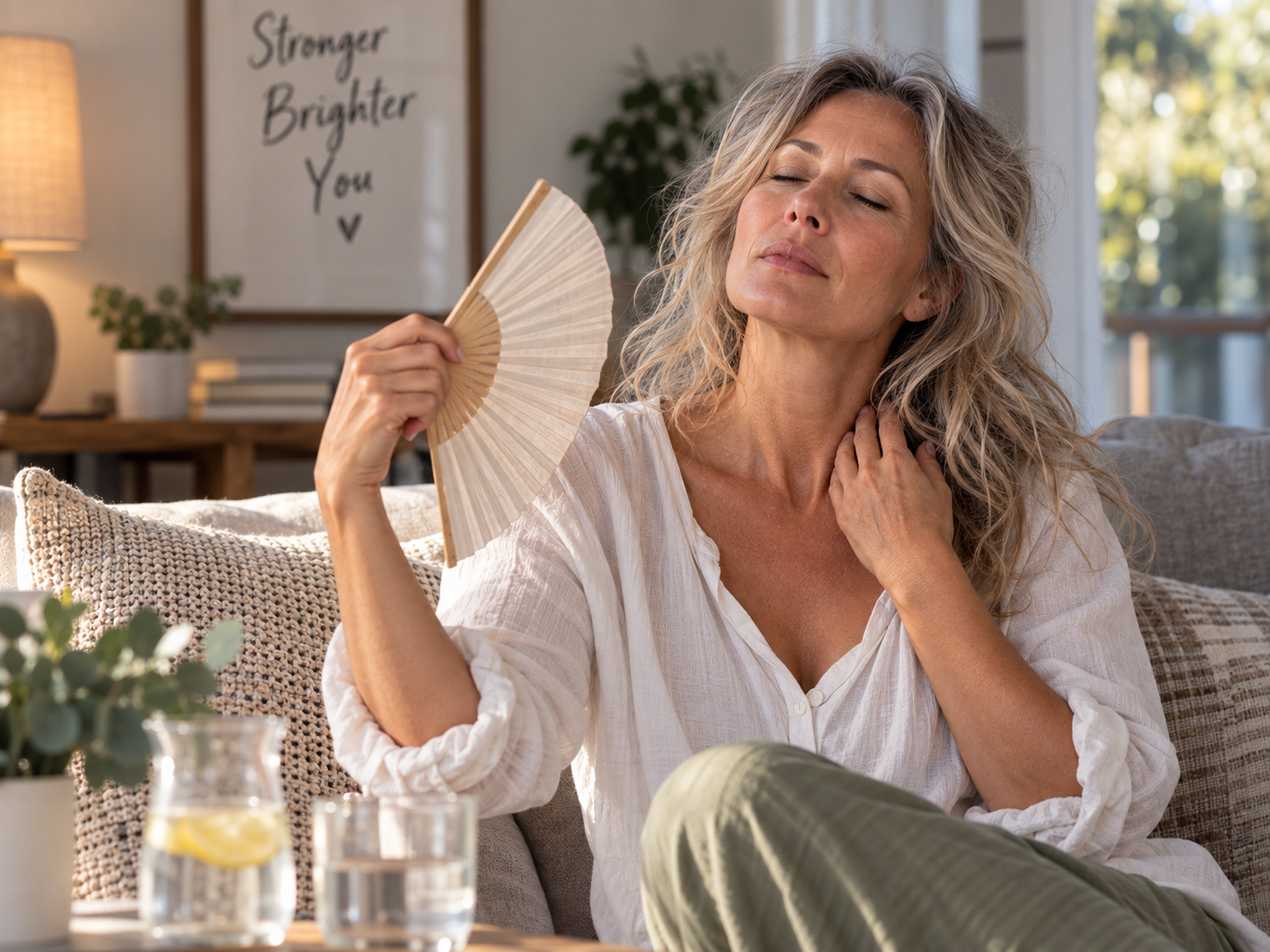
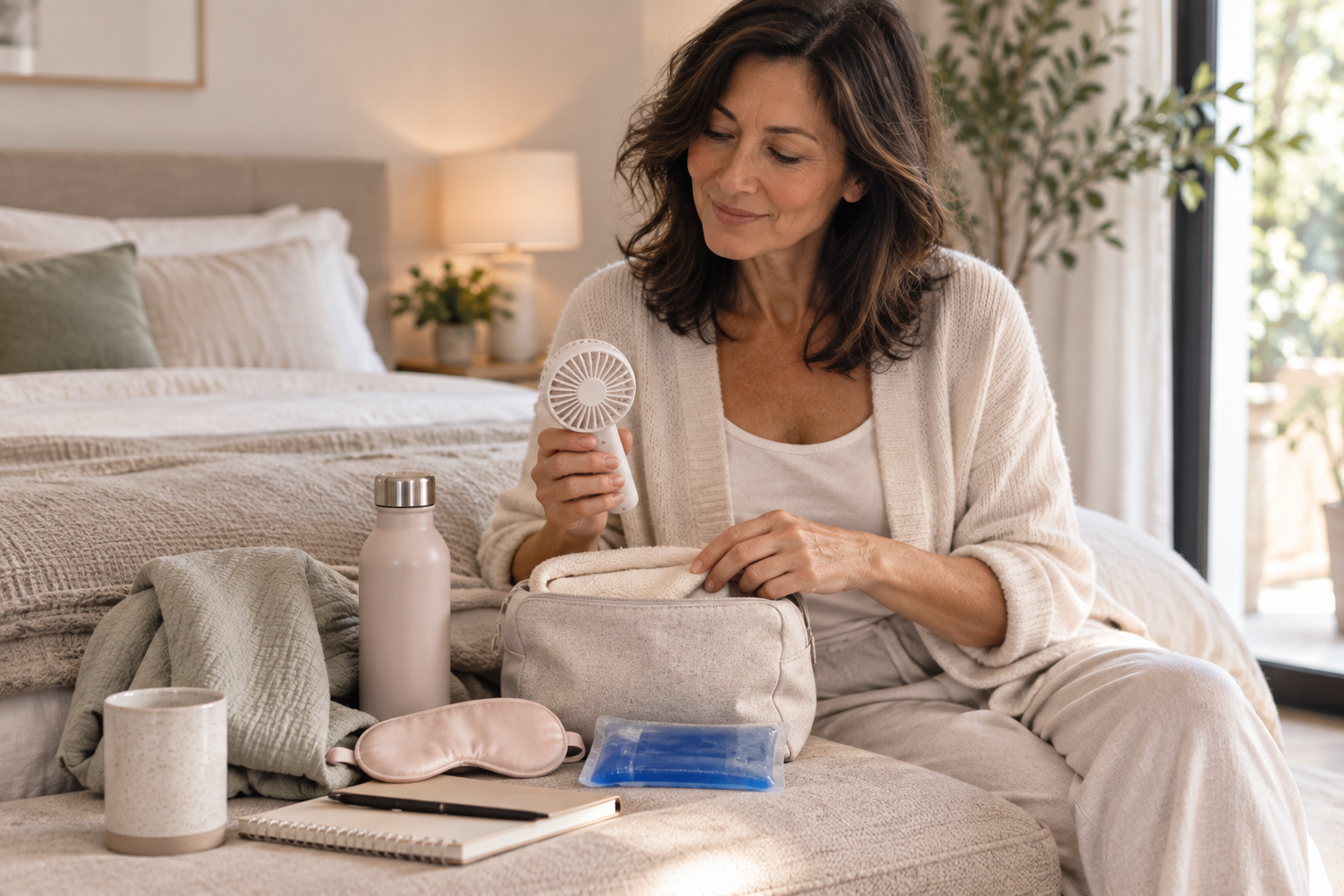
A small fan, cool pack or other easy way to cool down can be useful during a warm spell. Keep it somewhere you can reach without searching for it.
Lightweight sleep layers
Breathable sleepwear and bedding that can be adjusted quickly are practical when night sweats interrupt sleep.
A water bottle or glass
Keep water close at night or during the day if sweating leaves you feeling thirsty. It does not need to be a special menopause product.
A small symptom log
A notebook or phone note can help you notice patterns in hot flashes, sleep, periods, triggers and what actually seems to help.
1. Make cooling easy
For hot flashes and night sweats, the first goal is often simple: make it easier to cool down. The NHS recommends lightweight clothing, a cooler bedroom, a fan, a cool shower or a cold drink as practical measures some women can try. [2]
2. Build a night-sweat backup
If night sweats are the main issue, the best comfort kit may be less about gadgets and more about making the aftermath easy.
- Keep a fresh lightweight top nearby.
- Use breathable sleepwear and bedding you can change without much effort.
- Keep water within reach.
- Have a small towel nearby if sweating is frequent.
- Keep your bedroom setup simple enough that changing a damp layer does not fully wake you.
3. Add a symptom note, not a symptom obsession
A short log can be useful when symptoms are new, changing or difficult to explain. Note the date, approximate time, symptom, intensity and anything obvious that preceded it.
This kind of record can also make a healthcare appointment more useful. The Menopause Society specifically recommends tracking bleeding patterns when changes need assessment. [3]
4. If dryness is part of the picture
Vaginal dryness, burning or irritation can occur around menopause and deserves a different kind of comfort strategy. This is one area where a generic body lotion is not a substitute for a product designed for vaginal use.
Depending on the symptoms and your circumstances, vaginal moisturizers or lubricants may be options, and a clinician can discuss whether vaginal estrogen or another treatment is appropriate. The NHS advises seeking professional advice if symptoms are troublesome. [4]
5. Know what not to put in the kit
A practical kit is also about avoiding things that create more confusion.
- Do not assume every supplement marketed for menopause is effective or safe for you.
- Do not treat a single symptom as proof that everything is caused by menopause.
- Do not collect products simply because they are labeled “menopause.”
- Do not delay medical advice for persistent, severe or unusual symptoms because a comfort product seems easier.
The NHS specifically advises talking with a doctor before taking herbal supplements or complementary medicines. [2]
The 5-minute kit setup
When a comfort kit is not enough
If symptoms are significantly affecting sleep, work, relationships or everyday life, it is reasonable to discuss treatment options with a healthcare professional. There are effective prescription options for bothersome hot flashes, and treatment can be individualized. [1]
Night sweats should not automatically be attributed to menopause either. If you regularly wake with soaking-wet bedding, especially with other concerning symptoms such as unexplained weight loss or fever, the NHS recommends getting them checked. [5]
Sources & further reading
Menopause Symptoms Women Should Know
If you are looking for practical next steps, explore the related guide and the carefully selected products already featured there.
Explore practical menopause comfort ideas →