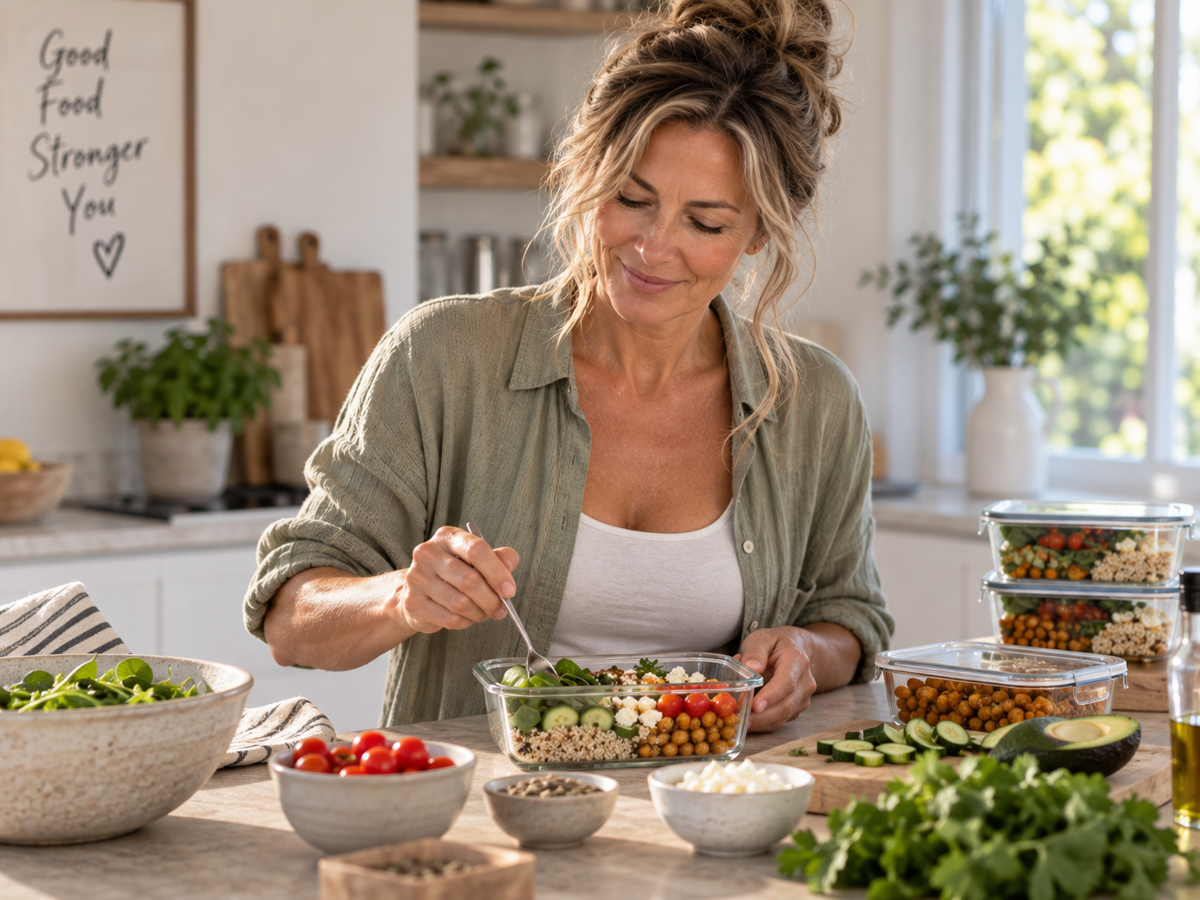
What makes a dinner “anti-inflammatory”?
There is no single official anti-inflammatory dinner and no food that needs to carry the whole burden. Research on dietary patterns points more toward an overall way of eating: plenty of vegetables and fruit, legumes, whole grains, nuts and seeds, unsaturated fats such as olive oil, and fish, while keeping highly refined foods and processed meats less central.
That is one reason a Mediterranean-style pattern works so well as a practical template. A 2026 systematic review and meta-analysis of randomized trials found that Mediterranean diets reduced some inflammatory biomarkers, including hs-CRP, IL-6 and IL-17, although effects were not uniform across every marker.
5 easy dinner formulas to keep in rotation
Instead of saving 30 recipes and cooking none of them, choose a few flexible formulas that tolerate substitutions. That gives you variety without creating a new shopping list every night.
The easiest way to make these dinners repeatable
Do one small preparation session rather than trying to meal-prep your entire week. The idea is to create components that can move between meals.

1. Choose
Pick one protein, two vegetables, one whole grain or potato and one flavour profile.
2. Prep
Wash and cut vegetables, rinse grains and make one dressing.
3. Cook
Use simple methods like roasting, one-pan dishes or the air fryer.
4. Repurpose
Turn leftovers into a grain bowl, salad or wrap for tomorrow.
What to put on the plate
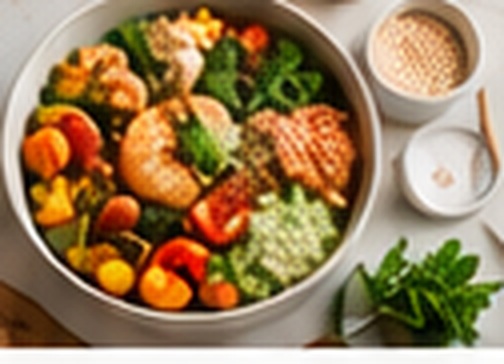
Keep it simple. Aim for a mix of colours, a good source of protein, a high-fibre carbohydrate and flavour from herbs, spices or a healthy fat.
Vegetables first
Use two colours when you can. Fresh or frozen both count.
Add a satisfying protein
Fish, beans, lentils, tofu, eggs, chicken or Greek yogurt.
Choose a whole grain
Potatoes, oats, brown rice, quinoa, farro or whole-grain bread.
Finish with flavour
Olive oil, lemon, herbs, garlic, ginger, spices, nuts or seeds.
Three common mistakes to avoid
Treating one “superfood” as the answer
Blueberries, olive oil, turmeric and salmon can all be useful foods, but the overall pattern matters more than any single ingredient.
Making dinner so restrictive that you stop enjoying it
A sustainable pattern leaves room for preferences, convenience and ordinary life. A recipe with 17 specialty ingredients is rarely a useful default.
Confusing “healthy” with “flavourless”
Acid, herbs, spices, toasted nuts and a good dressing can make a simple meal taste finished.
A simple 20-minute dinner template
You need
- 250 g chicken breast, thinly sliced
- 1 can white beans, drained
- 200 g baby spinach
- 1 red pepper, sliced
- 1 tbsp olive oil
- 1 lemon, juice + zest
- 1 garlic clove, minced
- Salt, pepper & dried herbs
How to make it
- Heat olive oil in a large pan. Season chicken and cook for 4–5 minutes until lightly browned.
- Add pepper and garlic; cook for 2 minutes. Stir in white beans and 60 ml water.
- Add spinach, lemon juice and zest. Cover for 2–3 minutes until the spinach wilts and the chicken is cooked through.
- Finish with herbs, black pepper and a drizzle of olive oil. Serve straight from the pan.
[1] Harvard T.H. Chan School of Public Health — Diet Review: Anti-Inflammatory Diet.
[2] Harvard T.H. Chan School of Public Health — Diet Review: Mediterranean Diet.
[3] Keshani et al., 2026 — Mediterranean Diet Reduces Inflammation in Adults: Systematic Review and Meta-analysis.
General information only; this article is not a diagnosis or medical treatment.