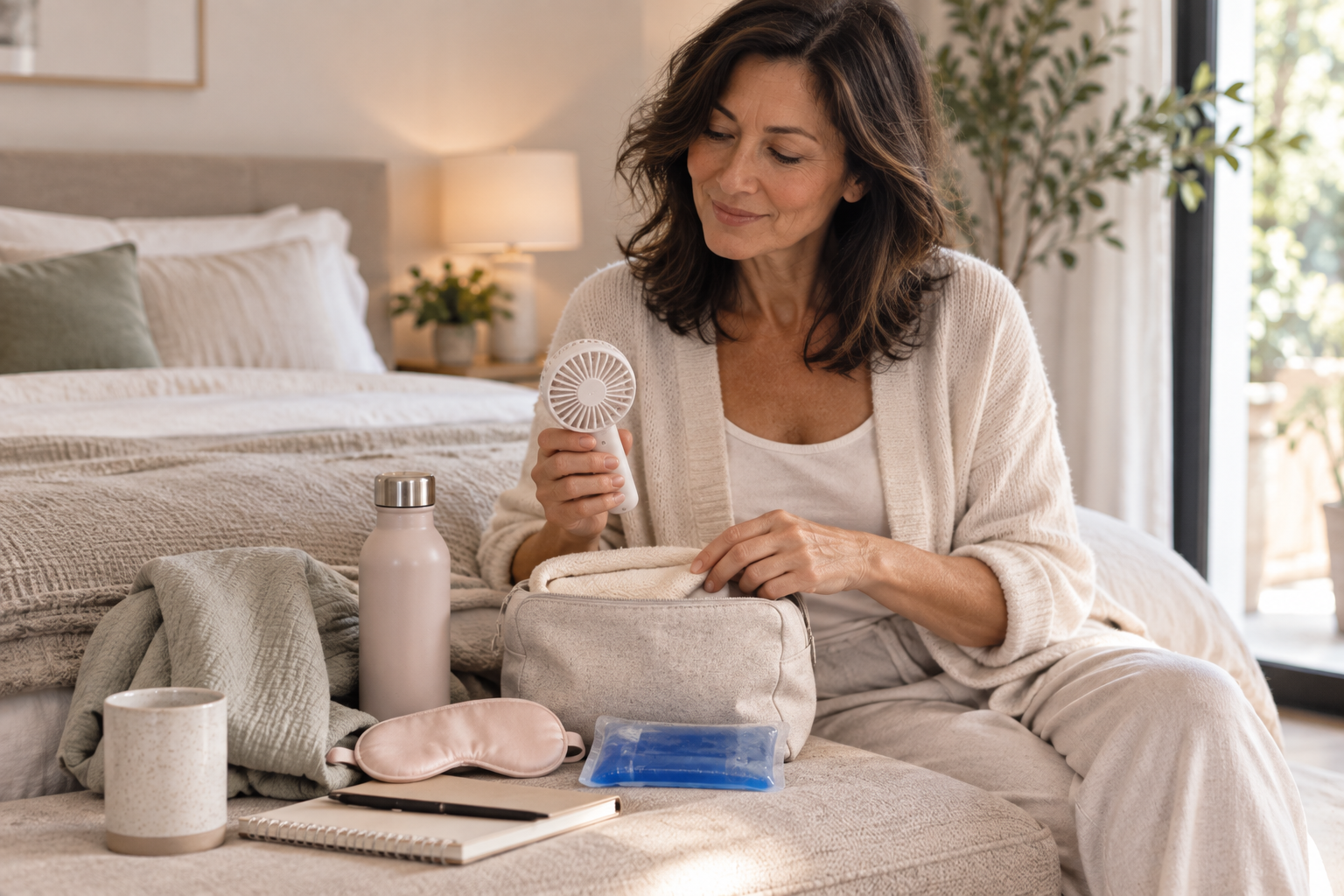
What belongs in a comfort kit?
Menopause symptoms vary widely. Some women mainly notice hot flashes. Others are dealing with night sweats, sleep disruption, vaginal dryness, mood changes or several symptoms at once. The Menopause Society notes that management is individual: lifestyle measures may be enough for some women, while others benefit from nonprescription or prescription options. [1]
That makes a personalized kit more useful than a universal checklist.
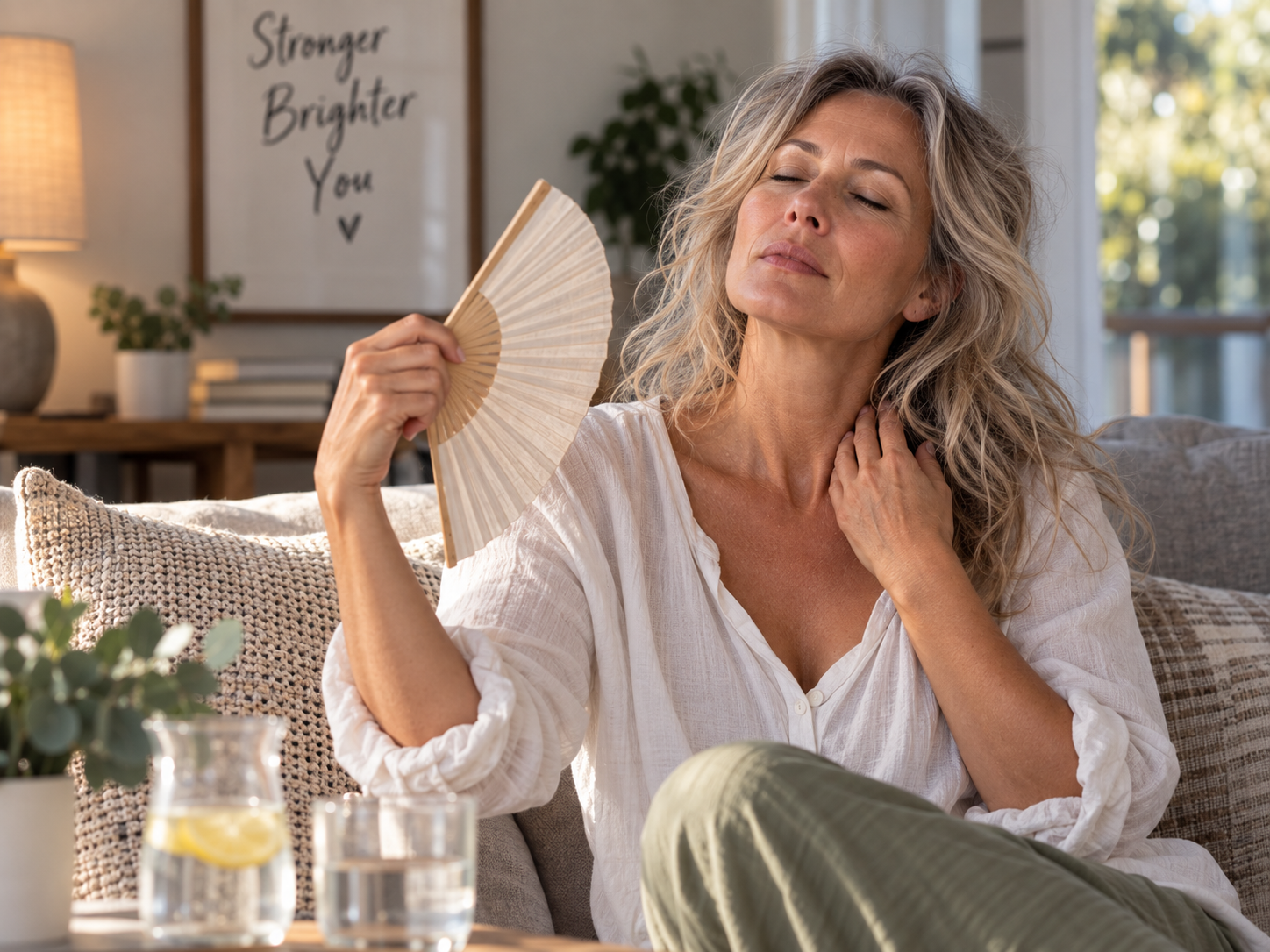
1. Make cooling easy
2. Build a night-sweat backup
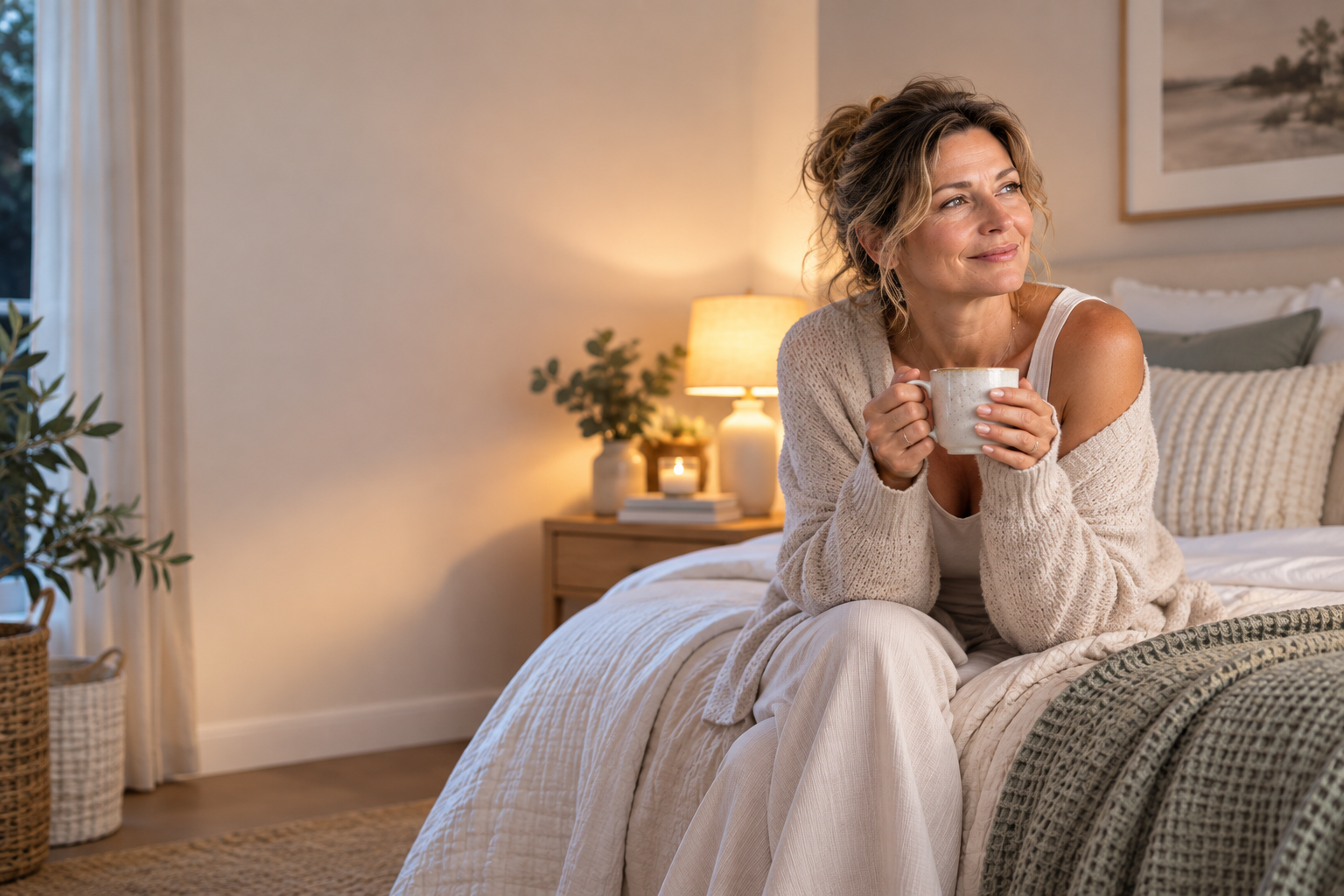
If night sweats are the main issue, the best comfort kit may be less about gadgets and more about making the aftermath easy.
Think in pairs: one thing for cooling, one spare layer, one source of water. The point is to reduce friction when you are tired — not to buy a drawer full of specialized products.
1. Start
If night sweats are the main issue, the best comfort kit may be less about gadgets and more about making the aftermath easy.
2. Prepare
Think in pairs: one thing for cooling, one spare layer, one source of water. The point is to reduce friction when you are tired — not to buy a drawer full of specialized
3. Apply
Use
4. Repeat
Repeat
3. Add a symptom note, not a symptom obsession
Keep the approach simple, practical and flexible enough for everyday life.
Keep it practical
A short log can be useful when symptoms are new, changing or difficult to explain. Note the date, approximate time, symptom, intensity and anything obvious that preceded it.
Keep it practical
A Hot flash: when it happened, how disruptive it was and whether you were indoors, exercising, eating or drinking something hot. B Sleep: bedtime, awakenings and whether night swea
Keep it practical
This kind of record can also make a healthcare appointment more useful. The Menopause Society specifically recommends tracking bleeding patterns when changes need assessment. [3]
Adjust as needed
Menopause symptoms vary widely. Some women mainly notice hot flashes. Others are dealing with night sweats, sleep disruption, vaginal dryness, mood changes or several symptoms at o
4. If dryness is part of the picture
Practical point 1
For hot flashes and night sweats, the first goal is often simple: make it easier to cool down. The NHS recommends lightweight clothing, a cooler bedroom, a fan, a cool shower or a cold drink as practical measures some wo
Practical point 2
01 Keep one cooling tool within reach. A bedside fan or other simple cooling option is more useful when you do not have to get up and find it. 02 Dress in layers. Lightweight layers are easier to remove and replace than
5. Know what not to put in the kit
A practical kit is also about avoiding things that create more confusion.
The NHS specifically advises talking with a doctor before taking herbal supplements or complementary medicines. [2]
Sources: Sources & further reading The Menopause Society — Hot Flashes NHS — Things you can do to help menopause and perimenopause symptoms The Menopause Society — Perimenopause NHS — Common questions about vaginal oestrogen NHS — Night sweats