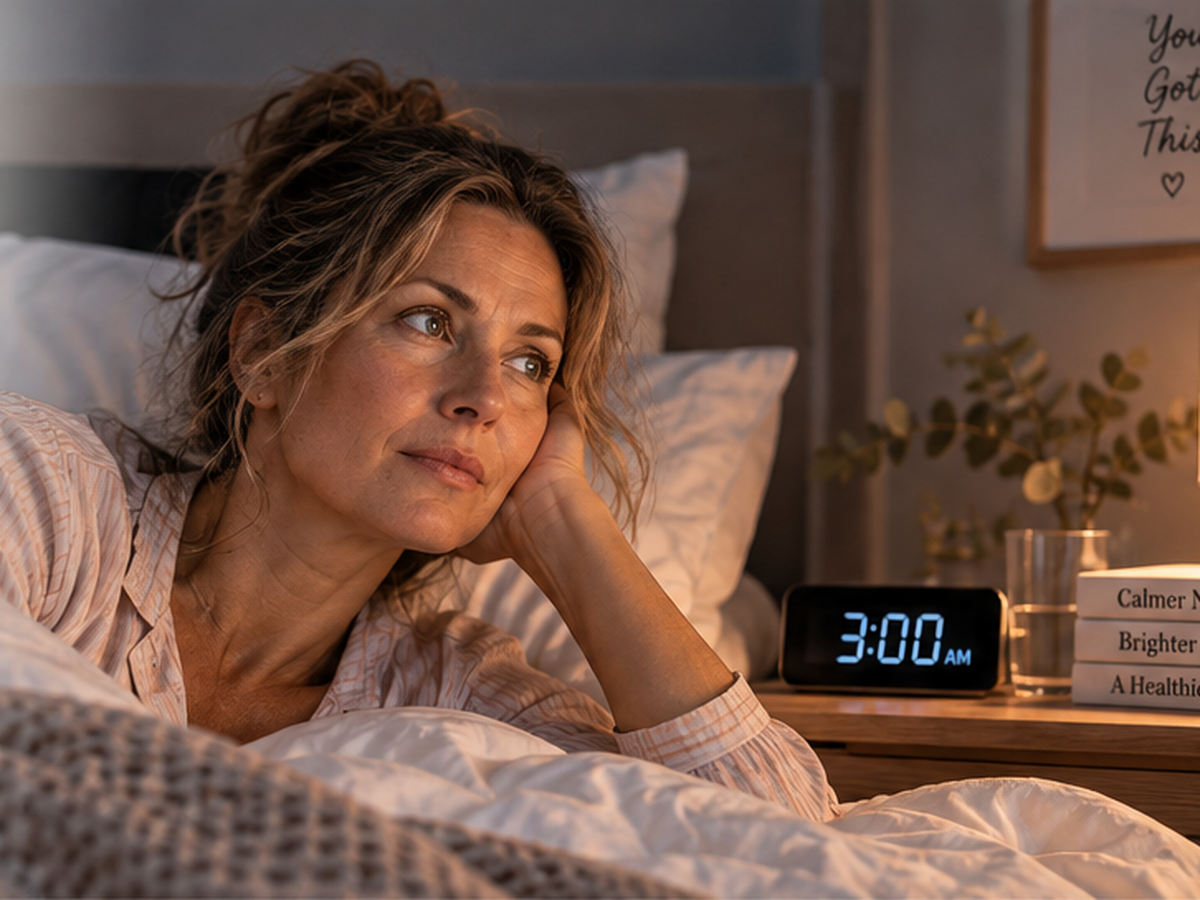
First: there is nothing magical about 3 AM
The clock time itself is not usually the important part. Sleep naturally moves through different stages during the night, and brief awakenings can happen without becoming a problem. The issue is when you wake fully, stay awake, or start anticipating the next wake-up.
During the menopause transition, sleep disturbances can include difficulty falling asleep, staying asleep and waking earlier than planned. Night sweats can make this worse. The NHS specifically notes that menopause and perimenopause can affect the ability to fall asleep and stay asleep, while The Menopause Society lists sleep disturbances among common menopause-related changes. 1
What can wake you in the middle of the night?
1. Heat or night sweats
Feeling suddenly hot, sweating, throwing off the covers and then becoming too cold can fragment sleep. Night sweats are a recognised menopause symptom and can be particularly disruptive because they wake you with physical discomfort. 2
If this sounds familiar, look at the sleep environment first: room temperature, bedding, sleepwear and the surface you are sleeping on. You do not need to change everything at once.
2. Your bedroom is too bright or noisy
A small amount of light or an unpredictable noise may be enough to turn a brief awakening into a full one. Street lighting, a partner's movement, traffic or household sounds can all become more noticeable once you are awake.
The practical goal is not perfect silence or darkness at any cost. It is reducing the obvious interruptions you can actually control.
3. Your body is uncomfortable
A pillow that leaves your neck unsupported, bedding that feels too warm or a sleeping position that becomes uncomfortable can make a normal brief awakening much harder to recover from.
This is one reason a good sleep setup should be treated as a system rather than a collection of products: temperature, light, sound and physical support solve different problems.
4. Stress keeps the brain switched on
Sometimes the first problem is physical — and the second is mental. You wake, notice the time, start calculating how many hours remain, and suddenly the brain is working much harder than it was five minutes earlier.
That does not mean you can simply “stop worrying.” It means the response to the awakening matters. Keeping the room dark, avoiding clock-watching and not turning the wake-up into a phone session can reduce the amount of stimulation after you wake.
5. There may be another reason
Menopause is not a catch-all explanation for every sleep problem. Stress, medications, alcohol or caffeine, pain, restless legs, sleep apnoea and other health issues can also contribute to insomnia or repeated awakenings. 3
What to do when you wake up at 3 AM
Build a 3 AM-friendly bedroom
The best bedroom is not necessarily the one with the most sleep gadgets. It is the one that still works when you wake half asleep.
- Temperature: make it easy to remove or add a layer without fully waking yourself.
- Light: keep the room as dark as practical, with minimal bright LEDs.
- Sound: reduce unpredictable noise where possible or use consistent background sound if it helps.
- Comfort: make sure your pillow and mattress support your normal sleeping position.
- Night access: keep water and anything you genuinely need within easy reach, without creating a bright, cluttered bedside area.
When repeated 3 AM waking deserves attention
Occasional waking is different from a persistent sleep problem. If you are regularly struggling to stay asleep, the problem is affecting your daytime functioning, or you are concerned about symptoms such as loud snoring or interrupted breathing, it is worth discussing the pattern with a healthcare professional. The Menopause Society notes that menopause-related insomnia can have multiple contributors, and persistent insomnia can benefit from structured treatment rather than simply adding more sleep products. 4
For some women, treating bothersome menopause symptoms can help. For others, the sleep problem needs its own assessment. The important point is that you do not have to accept chronic poor sleep as something you simply have to live with.
- NHS — Symptoms of menopause and perimenopause
- The Menopause Society — Menopausal insomnia and hot flashes
- NHLBI — Sleep apnea symptoms
- NHS — Insomnia
This article is general information and is not a diagnosis or a substitute for medical advice.
More from Better After 45
Better Sleep During Menopause
If you are looking for practical next steps, explore the related guide and the carefully selected products already featured there.
Explore the practical sleep tools and routines →