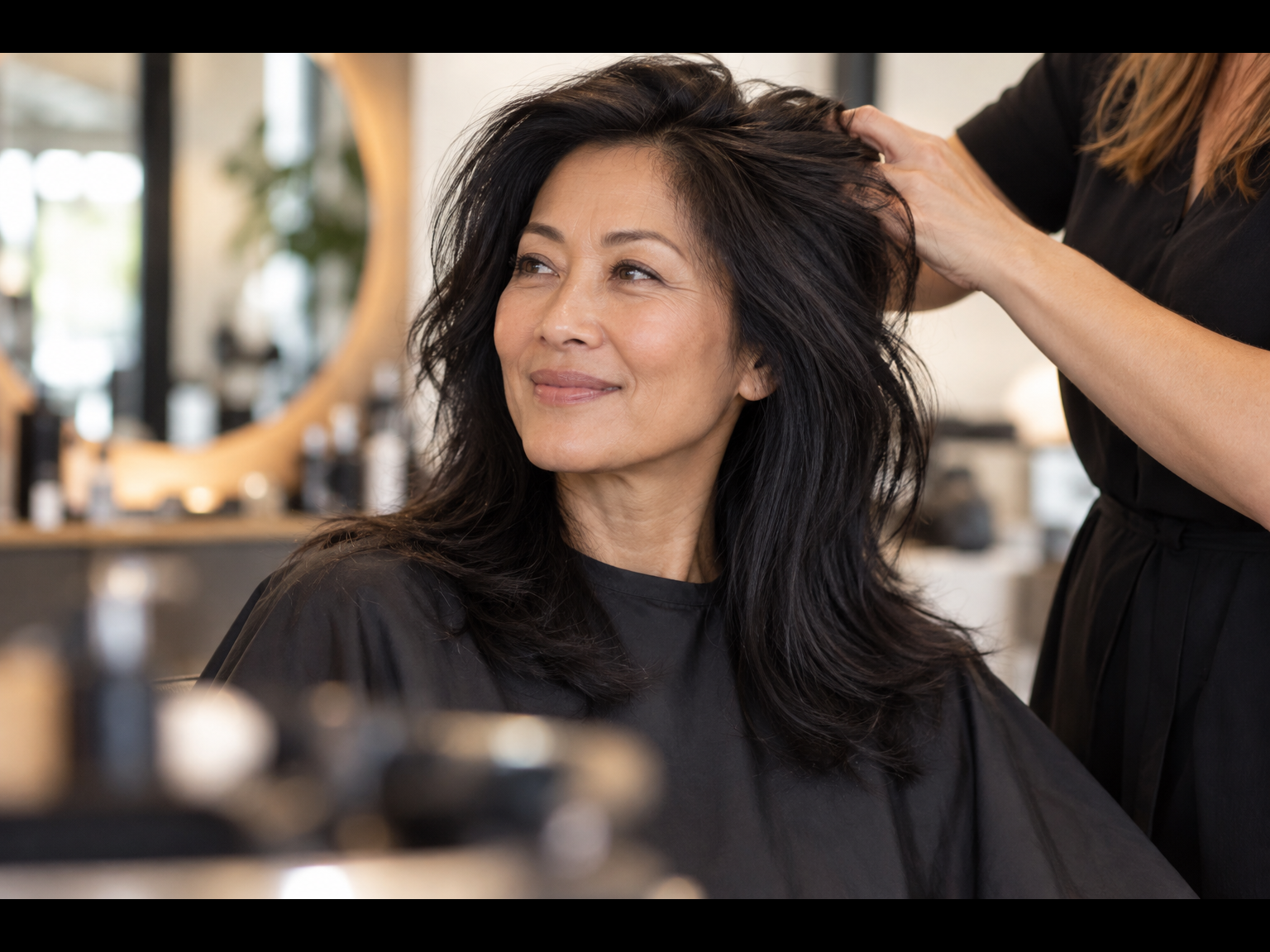
Start by figuring out what “flat” actually means
Fine hair can look flat for several different reasons. The strands themselves may be fine, the roots may sit close to the scalp, the haircut may carry too much weight, or product may be making the hair collapse. If density has also changed, the part or scalp may simply be more visible.
That is why the best volume routine is usually not “add more product.” It is remove the things that weigh the hair down, then add lift where it matters.
5 simple ways to make fine hair look fuller
Lift the roots, not the whole head
Volume usually looks most convincing when it starts close to the scalp. Apply a small amount of lightweight volumizing product to the root area and direct your drying or brushing effort there.
Keep heavy products away from the scalp
Fine hair can lose movement when it is coated with too much oil, cream, conditioner or styling product. If your hair feels soft but looks flatter, product weight may be part of the problem.
Move your part slightly
A small change in part placement can give roots that normally lie in one direction a little more lift. You do not need a dramatic side part — even a subtle shift can change the shape.
Protect the visual weight of the ends
Fine hair often benefits from a shape that keeps the perimeter looking substantial. Too much aggressive layering or thinning can make the ends look wispy rather than fuller.
Choose flexible texture over stiffness
A touchable finish usually looks more natural than a heavily lacquered one. If you want extra texture, add it selectively at the end rather than coating the entire style.
Use heat as a tool, not the whole routine
Excessive heat can damage hair and increase breakage. Use lower or medium settings where possible and let the hair cool into shape rather than repeatedly reheating it.
Why the haircut matters more than another styling product
When fine hair feels harder to style, the first instinct is often to buy something that promises volume. But the underlying shape matters. A cut that works with your natural texture can create a better starting point every morning.
For many people, the useful conversation with a stylist is not simply “I want more volume.” Be more specific: “I want the ends to look substantial, the crown to have movement, and I do not want to spend twenty minutes styling it.” That gives the stylist something practical to work with.
A simple 5-minute volume routine
- Minute 1: Start with damp, not soaking-wet hair. Apply a small amount of lightweight root-volume product where you actually want lift.
- Minutes 2–3: Work in a few sections around the crown and part. Lift the roots with your fingers or a brush while directing warm air at the base.
- Minute 4: Let the lifted roots cool briefly before arranging the hair. Cooling helps the shape settle without needing more product.
- Minute 5: Finish selectively. If you need more texture, use a small amount at the areas that have gone flat rather than adding product everywhere.
Three things to stop doing if your hair keeps falling flat
- Stop piling conditioner onto the roots. For fine or straight hair, the AAD recommends focusing conditioner on the ends rather than coating the scalp area.
- Stop rubbing and tugging when hair is wet. Wet hair is more vulnerable to breakage. Gentle handling matters, especially if the hair is already fragile.
- Stop chasing volume with maximum heat. More heat does not automatically mean more volume. Excessive heat can damage the hair shaft and contribute to breakage.
When “fine hair” may actually be thinning hair
Fine hair describes the diameter and feel of individual strands. Thinning describes a reduction in density or visible coverage. You can have naturally fine hair without having hair loss, and you can also have fine hair plus a separate thinning process.
Pay attention if your part is progressively widening, your ponytail is becoming noticeably smaller, shedding has increased and stayed elevated, or you are seeing patchy areas or scalp changes. Those signs are worth discussing with a dermatologist rather than treating them as a styling problem alone.
The American Academy of Dermatology notes that female pattern hair loss commonly begins in midlife and can progress over time. A dermatologist can help distinguish it from other causes of hair loss and choose an appropriate treatment if one is needed.
The goal is easier hair, not perfect hair
The most useful volume routine is one you will actually repeat. Start with the haircut and root placement, keep product light, handle the hair gently and use heat deliberately. You can make fine hair look fuller without turning every morning into a blowout.