Small does not mean minimal for the sake of minimal
A smaller wardrobe is useful when it reduces decisions. It is not useful if you remove half your clothes and then discover that the remaining pieces do not cover work, weekends, weather changes or the occasions that matter to you.
The goal is therefore not a strict number such as 20 or 30 pieces. The goal is high usefulness per piece: clothes that fit your current life, work with other clothes you own and can be worn repeatedly without feeling like the same outfit every day.
Step 1: Build around your actual week
Step 2: Choose a small core
A useful core can be surprisingly simple. The exact pieces should depend on your climate, work, lifestyle and taste, but most wardrobes benefit from a few categories that can cross over between outfits.
2–3 reliable bottoms
For example, one dark jean, one comfortable tailored or ponte trouser and one seasonal alternative. Choose silhouettes you already know you will wear.
4–6 easy tops
Mix everyday tees, knit tops, shirts or blouses. Repeating a good top is a feature, not a wardrobe failure.
2–3 useful layers
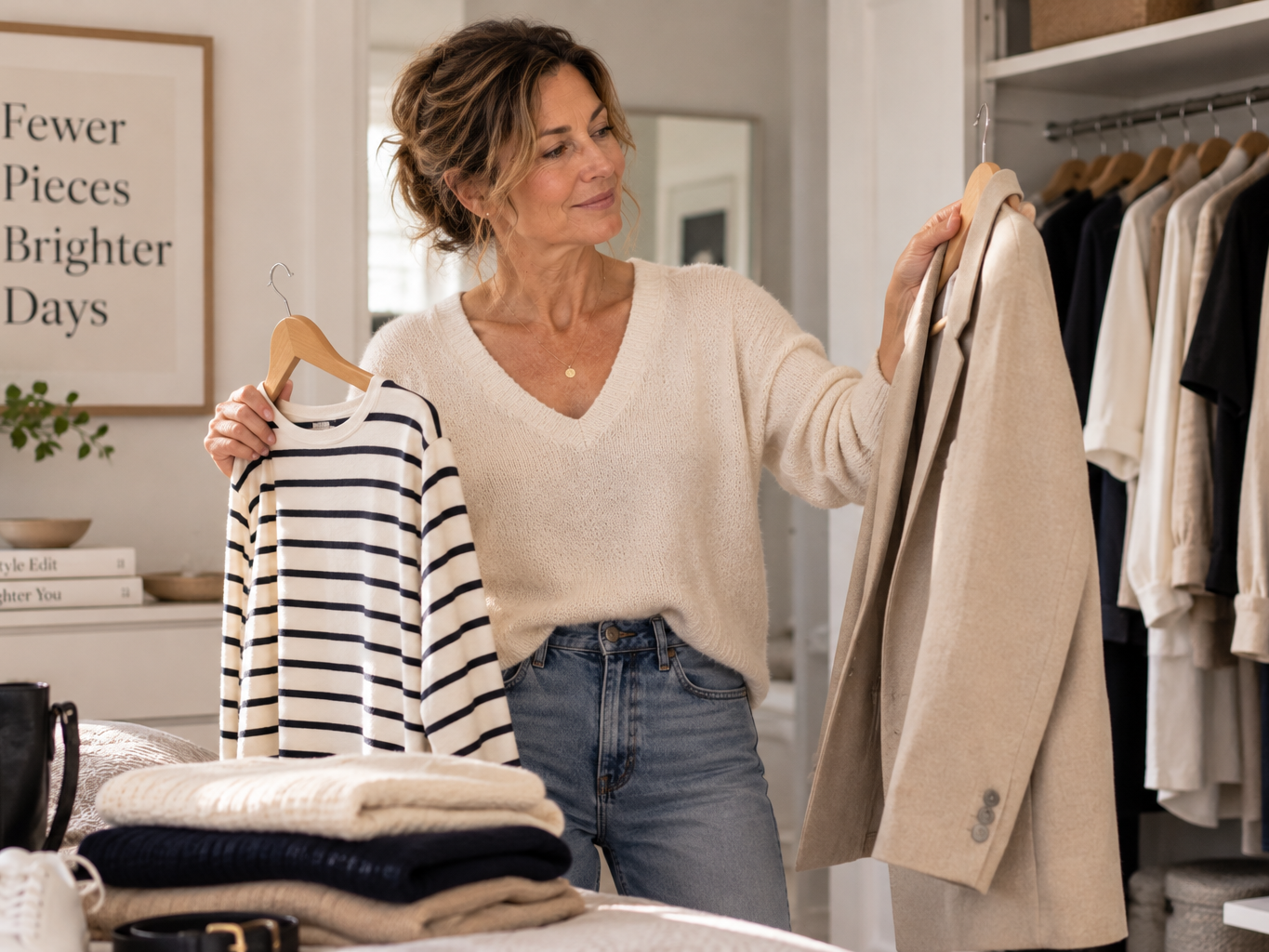
A cardigan, jacket, blazer, overshirt or lightweight coat can change the feel of several basic outfits.
1–2 easy dresses
If you wear dresses, keep one or two that can move between casual and more polished settings with different shoes and accessories.
These numbers are a starting point, not a rule. A person who lives in jeans and knitwear needs a different core from someone who dresses formally five days a week.
Step 3: Use the three-outfit test
Before buying a new piece, mentally connect it to at least three outfits you could wear with clothes you already own. If you cannot do that quickly, pause.
The three-outfit test is not about banning fun purchases. It simply separates wardrobe builders from wardrobe orphans. You can still buy something purely because you love it — just know what job it is doing.
Step 4: Pick a small visual language
A wardrobe becomes easier when the colors, proportions and textures do not fight each other. You do not need to wear neutrals. You do need enough visual compatibility that pieces can move between outfits.
- Choose two or three dependable base colors you already enjoy wearing.
- Add one or two accent colors rather than buying every shade separately.
- Repeat a silhouette you know works for you while varying the fabric or color.
- Let accessories provide some of the variety instead of requiring a new outfit for every mood.
This is also where personal style matters. Current AARP guidance explicitly pushes back against one-size-fits-all capsule lists and recommends adapting the core wardrobe to your own lifestyle and preferences. [1]
Step 5: Make outfit formulas
Instead of trying to invent a complete outfit from scratch every morning, create a handful of formulas you can repeat.
What to remove first
Do not begin with the pieces you are emotionally attached to. Start with obvious friction.
- Items that no longer fit your current body comfortably.
- Pieces you repeatedly adjust, tug or avoid wearing because they are uncomfortable.
- Duplicates that perform exactly the same job while one is clearly preferred.
- Items that require a complicated combination of other pieces to look right.
- Clothes you have kept for a hypothetical future lifestyle that has not arrived.
Then make a separate “maybe” section. You do not have to make every decision in one afternoon.
What a small wardrobe should not become
There is a difference between reducing clutter and creating a new set of rules. You do not need to own exactly ten essentials, wear only beige, or replace every older item with something “timeless.” Style advice can be useful without becoming a uniform.
A good wardrobe can include trend pieces, color, prints, sentimental clothes and things that simply make you happy. The test is whether those pieces earn their space in your real life.
The 30-minute wardrobe reset
The Better After 45 rule
Buy for your real life. Repeat what works. Add variety through styling, not constant replacement. A small wardrobe is successful when getting dressed becomes easier — not when the number of hangers becomes an achievement.
Sources & further reading
Easy Outfits for Women Over 50
If you are looking for practical next steps, explore the related guide and the carefully selected products already featured there.
Explore practical wardrobe picks →