
The easiest way to build a high-protein meal
A good meal does not need a complicated nutrition calculation. Start with a recognizable protein source, add vegetables or another plant food, then choose the carbohydrate and fat that make the meal satisfying.
For many women after 45, the bigger challenge is consistency. The meal that is theoretically perfect but takes an hour to prepare on a Tuesday is less useful than a simple chicken-and-vegetable bowl you can make twice a week without thinking about it.
Six meal formulas worth repeating
These are not rigid recipes. Think of them as templates you can change according to season, appetite and what is already in your fridge.
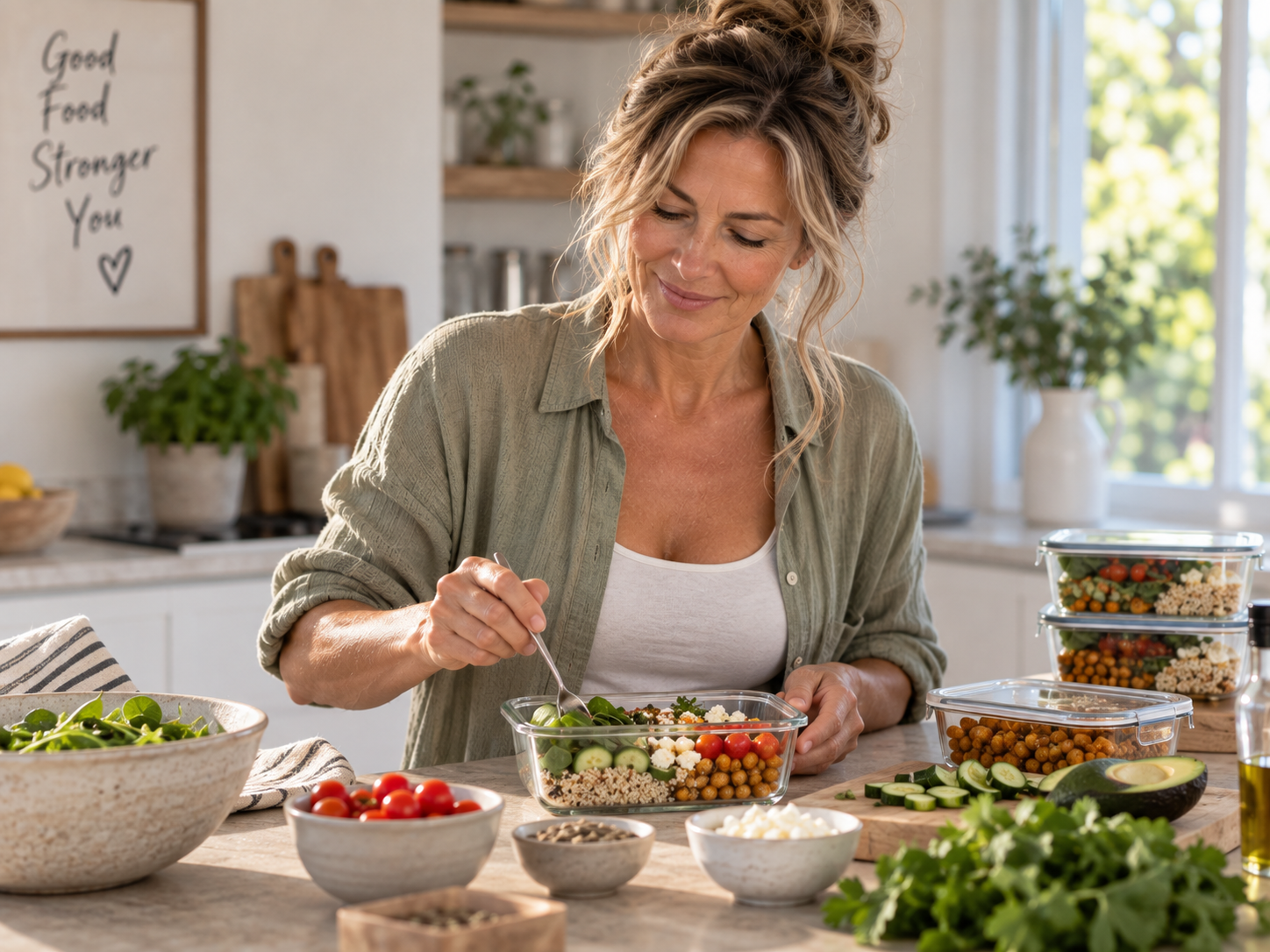
A 45-minute weekly prep session
The point is not to spend Sunday cooking twelve identical meals. A better system is to create a few components that can become different meals. Monday might be a grain bowl, Tuesday a wrap, Wednesday a salad and Thursday a soup using the same underlying ingredients.
Choose the cooking method that removes the most friction
If you want fast, hands-off protein
An air fryer is useful when you want chicken, fish, tofu or vegetables with relatively little active cooking. A dual-zone model is especially practical for meals because two components can cook at different settings and finish together. The Ninja Foodi FlexDrawer below can also turn its two zones into one large cooking area when you need more space.
If you want hearty meals without long simmering
A pressure cooker is a different kind of convenience. It is useful for beans, lentils, stews, shredded meat and other meals that normally reward long cooking. The advantage is not that pressure cooking makes a meal magically healthier; it is that it can make batch cooking much faster.
If chopping is what stops you cooking
A food processor earns its place when prep is the bottleneck. Chopping vegetables, grating ingredients, making sauces and preparing larger batches of ingredients can become much faster. The Bosch MultiTalent 8 is particularly versatile because it combines a large bowl with a broad set of cutting, grating, mixing and blending functions.
What a balanced high-protein meal can look like
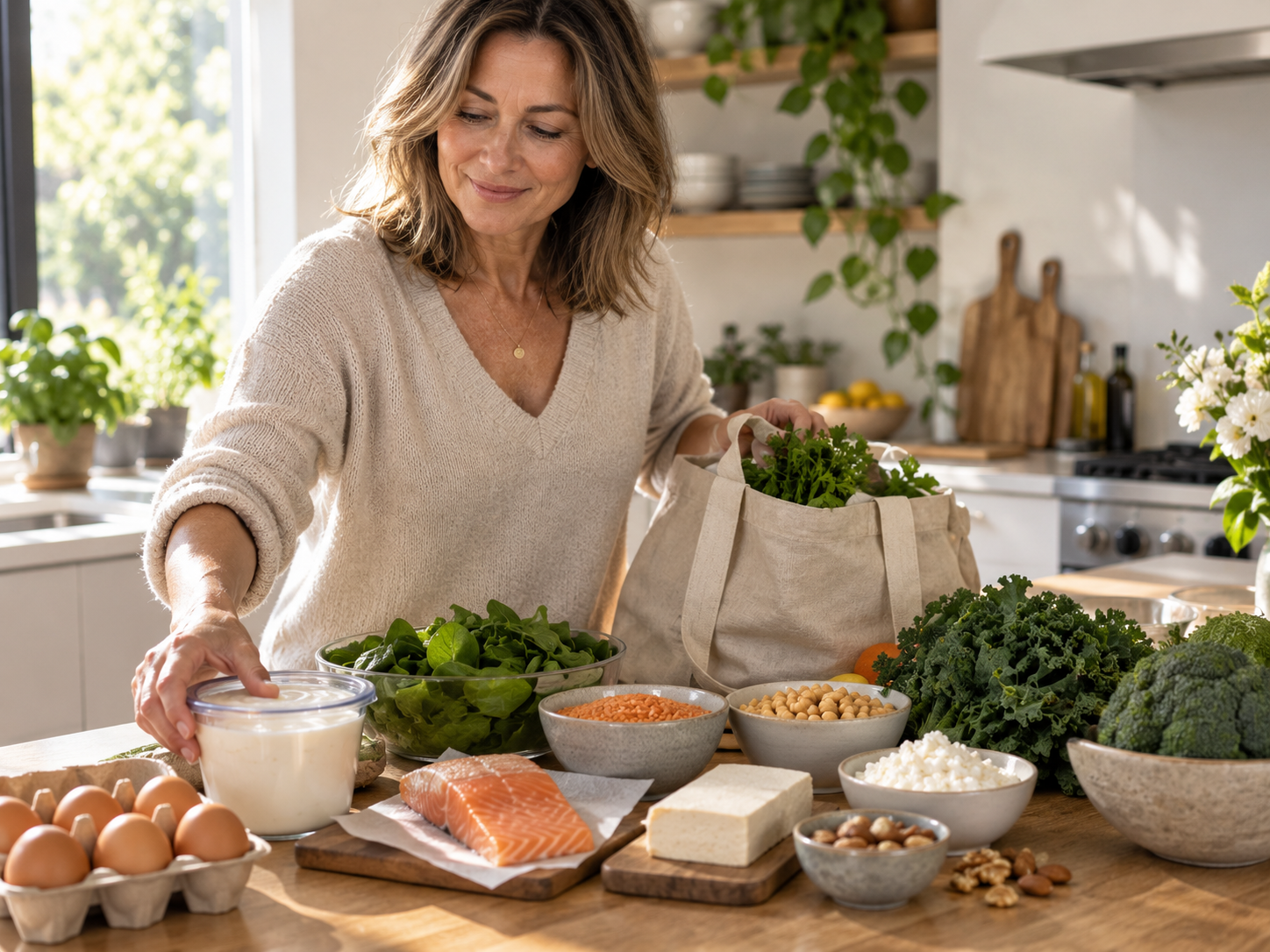
Start with fish, poultry, eggs, dairy, tofu, tempeh, beans, lentils or another protein-rich food you enjoy.
Think one cooked vegetable plus a fresh element, or vegetables plus beans, herbs or fruit. Variety matters more than perfection.
Potatoes, rice, whole grains or bread can make a meal more satisfying. You do not need to eliminate carbohydrates to make a meal protein-rich.
Use a small number of reliable combinations — lemon and herbs, soy and ginger, tomato and basil, yogurt and garlic — instead of reinventing every recipe.
Three kitchen upgrades that actually support the routine
We selected these products for different jobs rather than simply choosing three expensive appliances. None is required to eat a high-protein diet. Each earns consideration only if it removes a specific obstacle to cooking.
01 · The Fast Roaster
The Ninja Foodi FlexDrawer AF500EU is the most direct shortcut. Its 10.4-litre drawer can operate as two cooking zones or one larger MegaZone, which makes it useful for a protein-and-vegetable meal rather than just a basket of fries. Chicken in one zone and vegetables in the other is a much more relevant use case for this page.
02 · The Batch-Cook Pot
The WMF Perfect Premium 4.5 L pressure cooker is the premium option in this group. It is suited to soups, stews, beans, lentils and tender meat where conventional cooking can take much longer. If you regularly cook in batches, this is the type of appliance that can justify a higher price because it changes the time required for a whole category of meals.
03 · The Prep Workhorse
The Bosch MultiTalent 8 MC812S814 is for the part of cooking that happens before the pan or oven: chopping, grating, slicing, mixing and blending. Its 3.9-litre bowl and broad accessory set make it particularly useful when you cook for several portions at once.
Keep the roles separate
You do not need all three products. The point is to match the tool to the bottleneck in your kitchen.
The Ninja is for fast cooking. The WMF is for batch meals and long-cook foods. The Bosch is for preparation. If your current kitchen already handles one of those jobs well, skip the duplicate. Better equipment should make cooking simpler, not turn a healthy meal into a project.
One final principle: make protein ordinary
The most sustainable approach is usually the least dramatic one. Instead of asking how to make every meal “high protein,” ask how to make sure lunch and dinner both contain a clear protein source. Once that becomes automatic, the rest of the plate can stay flexible.
And remember that protein needs are individual. If you have kidney disease, another medical condition affecting nutrition, significant unintended weight loss or a prescribed diet, discuss your protein intake with your doctor or a registered dietitian rather than applying a generic target.