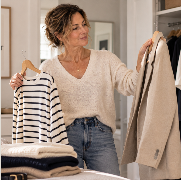
Why outfit formulas work
Getting dressed becomes harder when every morning starts with a blank page. An outfit formula removes some of that decision-making. Instead of asking what goes with what, you start with a structure that already works and adapt it to the day.
After 45, that can be especially useful when familiar clothes fit differently, comfort matters more, or your style has changed. The goal is not to dress younger or hide your body. It is to make proportion, comfort and personal style easier to manage.
Formula 1: Straight-leg jeans + simple top + polished shoe
Start with one pair of jeans that sits comfortably and falls cleanly from hip to ankle. Add a simple knit, tee or shirt. Finish with a loafer or another structured shoe.
- Keep the top relatively clean rather than adding several competing details.
- Use the shoe to make the outfit feel casual, polished or slightly dressier.
- A half-tuck or a shorter top can change the proportion without changing the clothes.
Formula 2: Wide-leg trousers + closer-fitting top + simple layer
Fuller trousers already create volume. Pairing them with a top that follows the body more closely gives the silhouette some visual structure without requiring tight clothing.
- Try a tucked or semi-tucked top to show where the body ends and the trousers begin.
- Add a cardigan, jacket or open shirt if you want another layer.
- Choose shoes that leave a clean line rather than visually chopping the ankle.
Formula 3: Monochrome base + contrasting third piece
Choose two pieces in similar or identical tones, then add one visible third piece: a scarf, jacket, cardigan or overshirt.
This is where a scarf can be useful. It can introduce texture or contrast without forcing you to buy another complete outfit. The same trousers and top can look different simply because the third piece changes.
Formula 4: Simple dress + structured layer + comfortable shoe
A dress can be the fastest possible outfit because the main silhouette is already solved. Add a structured jacket, cardigan or scarf and finish with a shoe you can actually walk in.
- Use the layer to change the proportion or add structure around the shoulders.
- If the dress is loose, a belt can create a different silhouette when you want one.
- If the dress already has shape, leave the waist alone and keep the accessories simple.
Formula 5: Trousers + knit + belt
This is the formula for days when the outfit feels too undefined. A belt gives the eye a clear stopping point at the waist or waistband and can make a simple knit-and-trouser combination feel intentional.
The belt does not have to mean “cinch everything in.” It can simply be a small visual detail that connects the shoe, bag or other accessories.
How to adapt a formula to your body
Start with the part of the outfit you already like. If you love your trousers but dislike a tucked top, use a shorter untucked top or an open layer. If you prefer coverage around the hips, choose a longer third piece rather than abandoning the whole formula.
The most useful question is not “What should a woman over 45 wear?” It is “Where do I want the visual weight of this outfit to sit?”
The 30-second outfit check
Build a five-formula wardrobe
You do not need five separate wardrobes for the five formulas. Start by identifying the pieces that can appear in more than one structure: one reliable pair of trousers, one pair of jeans, two or three simple tops, a layer, a versatile shoe and a few accessories.
Then photograph two or three combinations you already like. The next time you have no idea what to wear, you are not starting from zero.
Jeans, trousers or a simple dress you already know works.
A cardigan, jacket, overshirt or scarf can change the outfit quickly.
A polished loafer can cover more occasions than a highly specific trend shoe.
A belt or scarf can change proportion and visual interest without adding another outfit.
Final thought
The purpose of an outfit formula is not to make everyone dress the same. It is to make your own wardrobe easier to use. Once you have a few combinations that feel good, you can stop shopping for solutions every time getting dressed feels difficult.
This article focuses on practical styling principles rather than age-based fashion rules. Fit, comfort, proportion and personal preference vary widely. Product examples are included as optional tools for the styling ideas discussed.